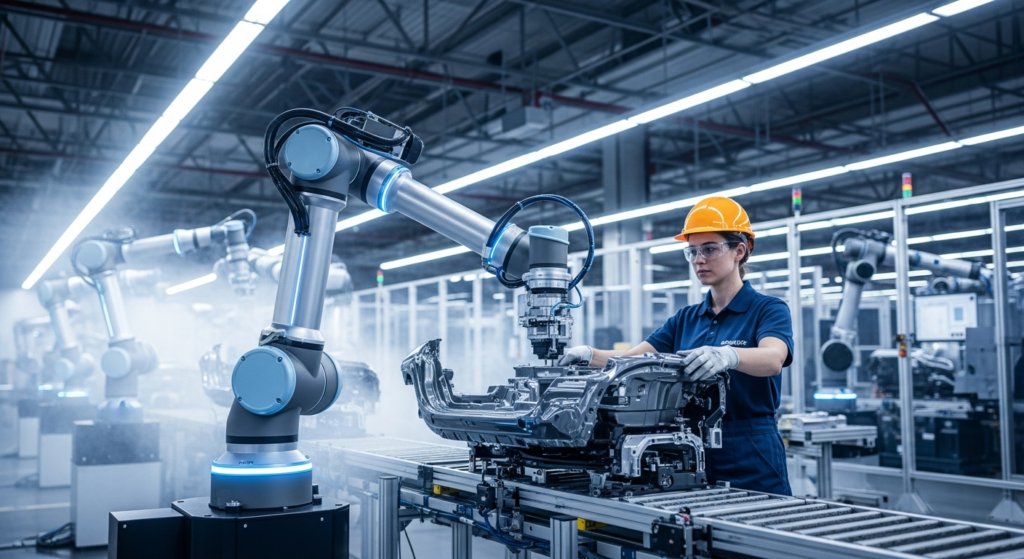
AI-powered collaborative robots are realising an incredible revolution in the manufacturing industry in 2026. These machines are safe to work with human workers on the factory floor unlike traditional robots which work in lonely environments. They may be furnished with cutting-edge AI, enabling them to make inferences based on the surroundings, adjust to the workflow and make processes more efficient on the fly. This unification assists factories to be more efficient, precise and safe and human workers to concentrate on innovation and strategic decision-making.
Collaborative robots powered by AI are not a far-off fantasy anymore since they are actively implemented in such sectors as automotive, electronics, pharmaceuticals, and food and beverage. They increase the speed of production, minimize mistakes, and allow sustainable production methods. They are essential in the current factories that seek to be competitive in the fast changing global market due to their capacity to work with humans.
Important Advantages in Production.
- Greater Precision: The AI machines carry out very accurate duties reducing mistakes and enhancing the quality of products.
- Adaptive Learning: They are able to learn with their human operators and are able to adapt to novel processes or changes in their products very quickly.
- Safe Human Co-operation: With the help of intelligent sensors and predicting AI systems, they are able to work safely with humans.
- Cost and Productivity Benefits: With automated tasks the cost of labor is cut and production cycles are accelerated.
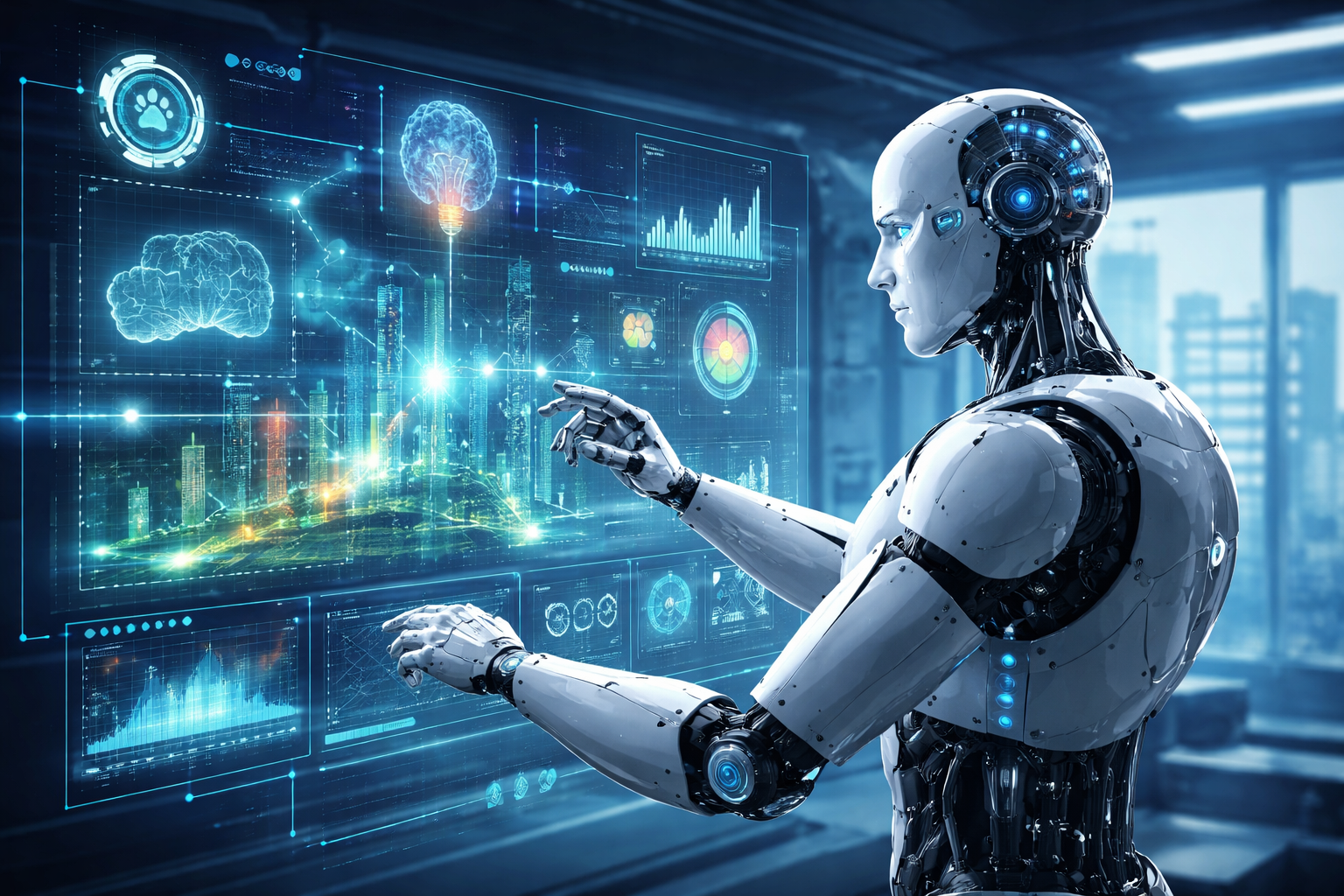
- Real-time Optimization: Data-based analytics are useful in determining the nature of a bottleneck, predicting maintenance, and enhancing allocation of resources.
The one heading encompasses all the key points of why collaborative robots are transforming contemporary manufacturing.
The Application of AI Machines in Industries.
Automotive and Electronics
Robots powered by AI are transforming the automotive and electronic industry by undertaking jobs that need precision, uniformity and speed in their execution. They are used in manufacturing of automobiles to assemble complicated components, high precision inspection, and work with fragile components. The electronic manufacturers use such AI machines to handle machines that are sensitive such as PCB assembly and testing. They will greatly contribute to the quality of products and efficiency in production as they will decrease human error, increase consistency, and accelerate production.
Food, Beverage and Pharmaceuticals.
Collaborative robots are used in the pharmaceutical, food and beverage industries to automate packaging, labeling and other manual operations. They are very accurate and have high hygiene and safety standards particularly in sterile environments because their AI systems are very precise. These machines are capable of adapting fast to the changes in product size or packaging design thus manufacturing becomes more flexible. The human workers are able to work in areas that demand judgment and innovations, which enhance a more effective and sustainable workflow.
The Future of AI-led Robotics.
Cognitive and Edge Computing.
The future generation of robots will be characterized by superior thinking capabilities, and it will be able to comprehend more complicated instructions, make independent choices, and interact with other machines without any issues. The introduction of edge computing will also allow processing data in real time on the factory floor, which will minimize delay and enhance decision-making. This enables the factories to be responsive to alterations in production, reduce downtimes and streamline work processes effectively.
Swarm Robotics and Multi-Industry Extrapolation.
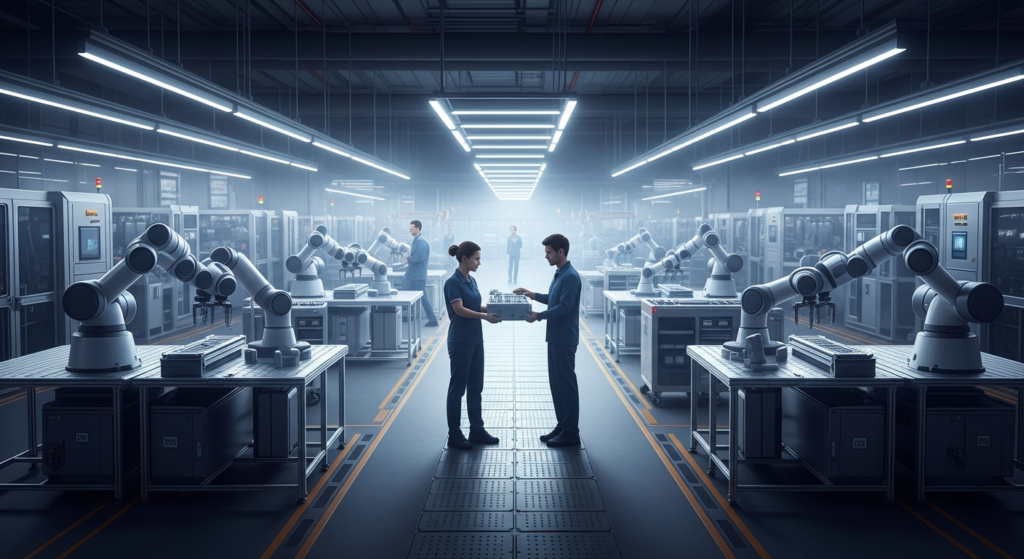
These AI machines will progressively work in sync in swarms where several units will collaborate effectively in large production lines. In addition to standard production, they are moving into logistics, healthcare, and construction where repetitive operations are being automated in order to increase the speed, safety, and efficiency of the operations. This inter-industry application will continue to increase in the years to come, and collaborative robots are to be one of the central objects of industrial automation.
Employee and Sustainability Favoritings.
The indirect workforce management and sustainability are also indirect benefits of AI-driven collaborative robots. They enable human workers to work on issues, make creative decisions and be strategically placed by automating repetitive, dangerous or physically challenging tasks. Efficient workflows minimize waste, energy and environmental pollution. Factories can become more resilient and flexible to market demand changes with fewer issues of manufacturers having to scale back operations because of fluctuation in market demand. Human-AI-driven machines can guarantee a smarter, safer, and greener industrial environment.
In order to gain quantitative insight into the effect:
- By using a 50 unit factory, errors in production may be reduced up to 40.
- There is a possibility of a boost in overall productivity by 2530 percent.
- The predictive analytics reduce costs of maintenance by 15%.
- Through workflow optimization, energy savings are possible (10 to 12 percent).
- The payback period is usually achieved within a period of 1218 months.
These figures emphasize the actual efficiency, cost-saving, and sustainability benefits the current manufacturing gets out of these AI machines.
Conclusion
The manufacturing industry in 2026 will be transformed by AIs with collaborative robots because they integrate intelligence, adaptability, and safety. They enhance productivity and minimize errors, streamline work processes, and enable human workers to concentrate on creative and strategic work. These AI machines are found everywhere in smart factories all over the world with applications in automotive, electronics, pharmaceuticals, and even food production. With the ever-growing technology, the combination of the two will lead to improved operational efficiency and sustainable, flexible and future oriented manufacturing facilities.
(FAQs)
Q1: What on earth is a collaborative robot?
A: Collaborative robots are created to be safe when used by human workers in the same areas.
Q2: What is the role of AI robots in enhancing the production efficiency?
A: They automate routine activities, minimize errors and streamline workflows in real time.
Q3: Is this the end of human workers due to the collaborative robots?
A: No, they supplement human labor by handling tedious jobs, and human beings are able to concentrate on innovation.
Q4: What industries are the most beneficiary with these AI machines?
A: Automotive, electronics, pharmaceuticals, food and beverage and more and more logistics and healthcare.
Q5: Which safety measures are applied by collaborative robots?
A: To prevent collisions and to operate safely they depend on sensors, predictive AI and adaptive control systems.