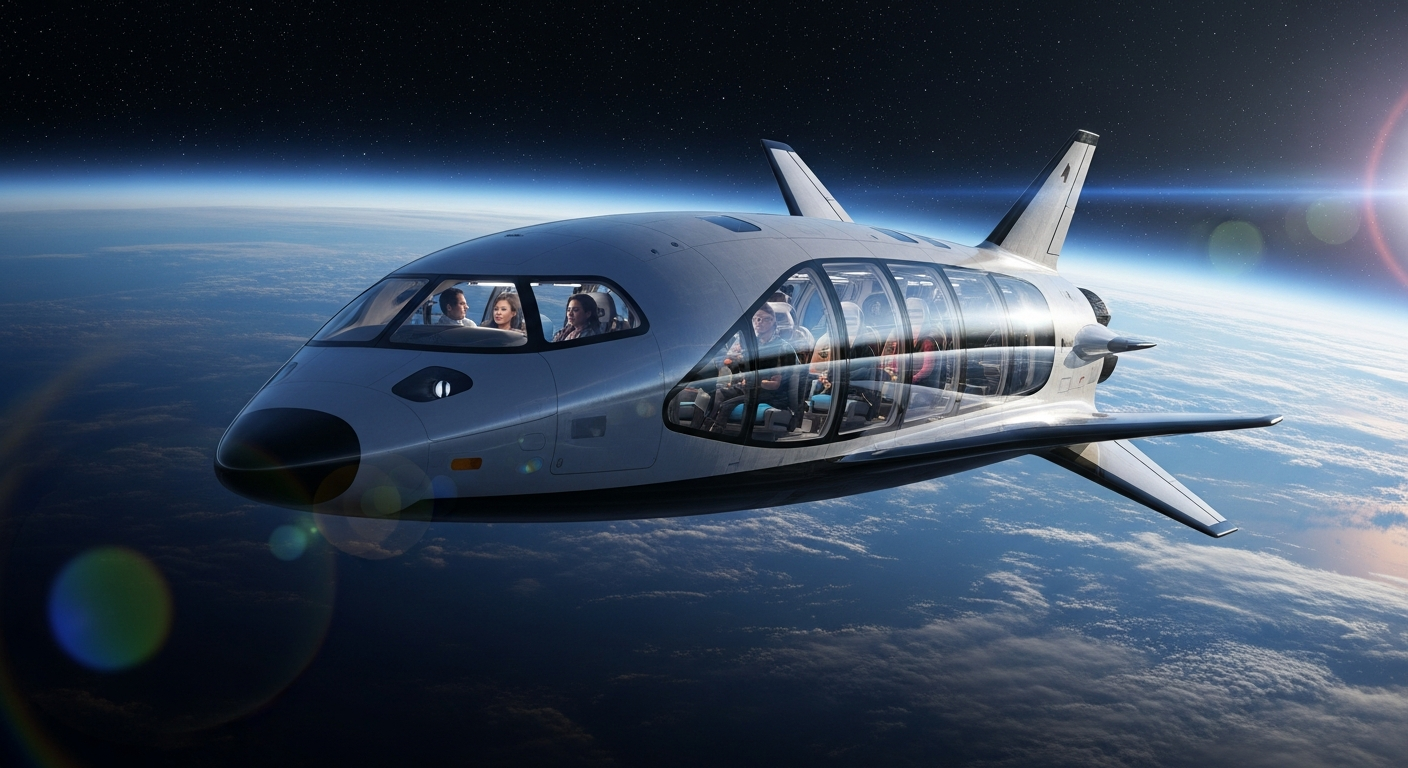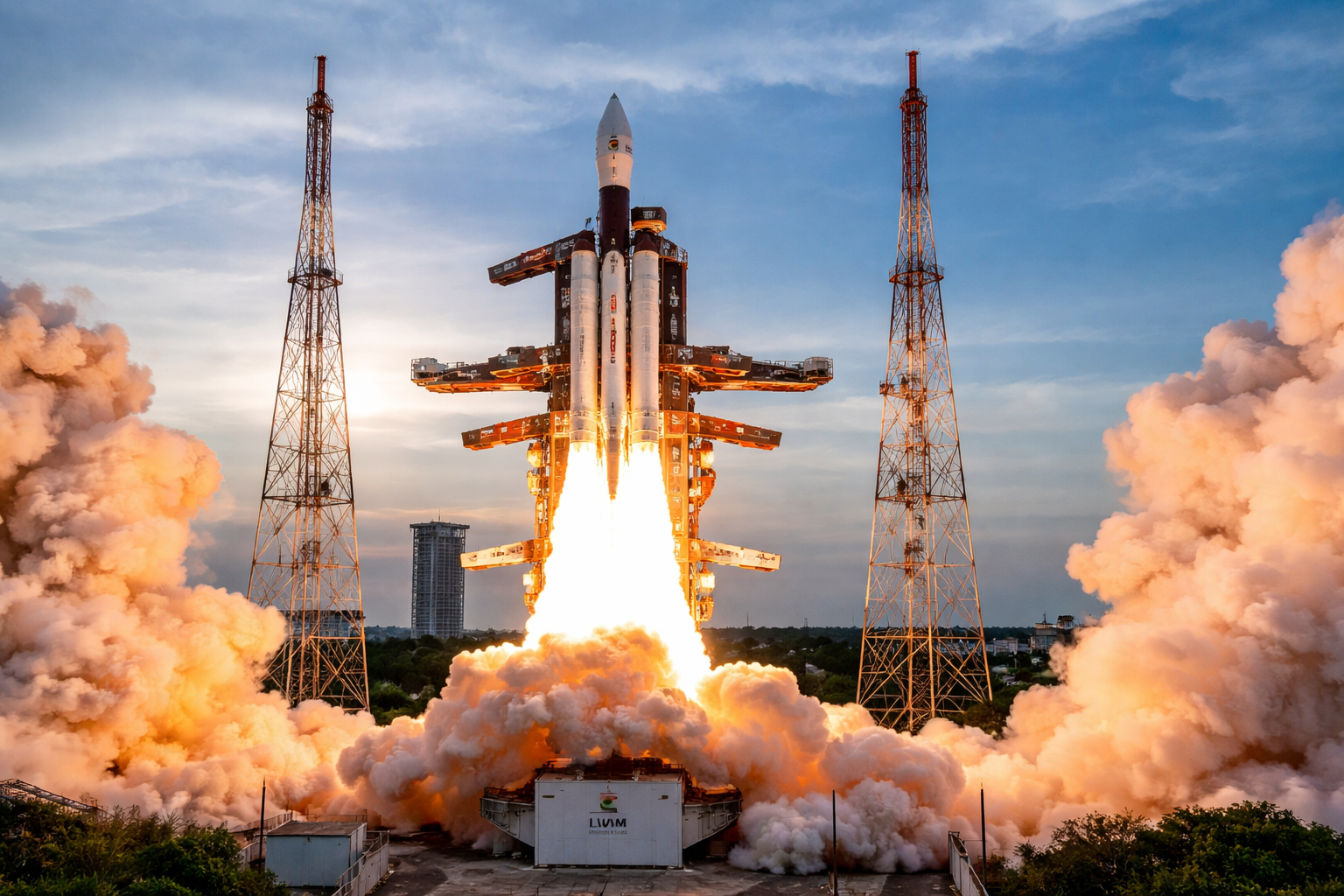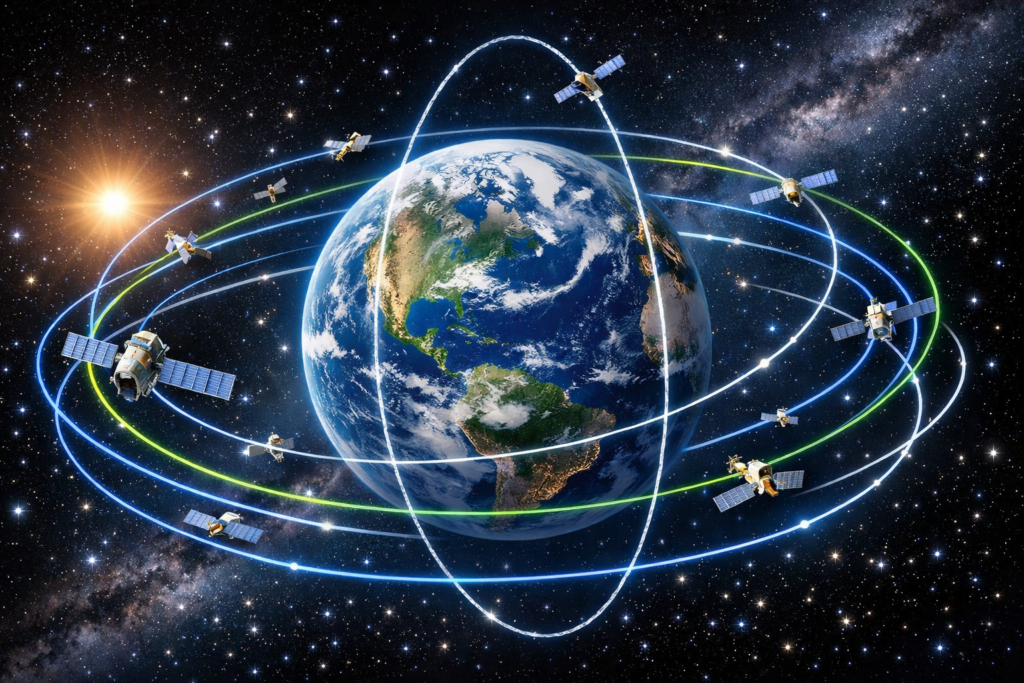
The idea of mobility is expanding to encompass not just roads, skies or oceans, as the human presence spreads across the planet and beyond. The mobility of orbits of Earth, the movement of satellites, spacecrafts and future space vehicles in the orbit and the orbit itself, is emerging as an imperative frontier. This growth is accompanied by a new challenge: how to efficiently control space traffic safely. Space is getting smaller as there are already thousands of satellites that are already orbiting the earth with many more on the way. The future lies with the quality of design of systems to arrange, control, and streamline movement within this huge but constrained environment.
Knowledge about Orbital Mobility.
What is Orbital Mobility?
Orbital mobility is the capacity of the objects like satellites, spacecrafts and space stations to move and maneuver in space. In contrast to land transportation, the movement in the orbit is controlled by sophisticated physics, such as gravity, speed, and orbital physics. Even minor changes need to be calculated accurately and propelled with energy efficiency.
Why It Matters Today.
As the number of satellite constellations soars, orbital mobility has ceased to be an option: it is now a necessity. The companies and governments are deploying communication, navigation, defense, and earth observation satellites. Without well-developed mobility systems, such objects are prone to crashes, inefficiency, and failure of the missions.
Orbital Movement types.
Orbital movements have a number of different types that determine the behavior of objects in the space:
- Communication satellite Low Earth Orbit (LEO) operations.
- Geostationary Orbit (GEO) weather and broadcasting.
- Transfer orbits are used to transfer between altitudes.
- Deep space missions to missions beyond the orbit of the earth.
- Self-governing collision avoidance manoeuvring.
The Increasing Space Traffic Management Requirement.
What is Space Traffic Management (STM)?
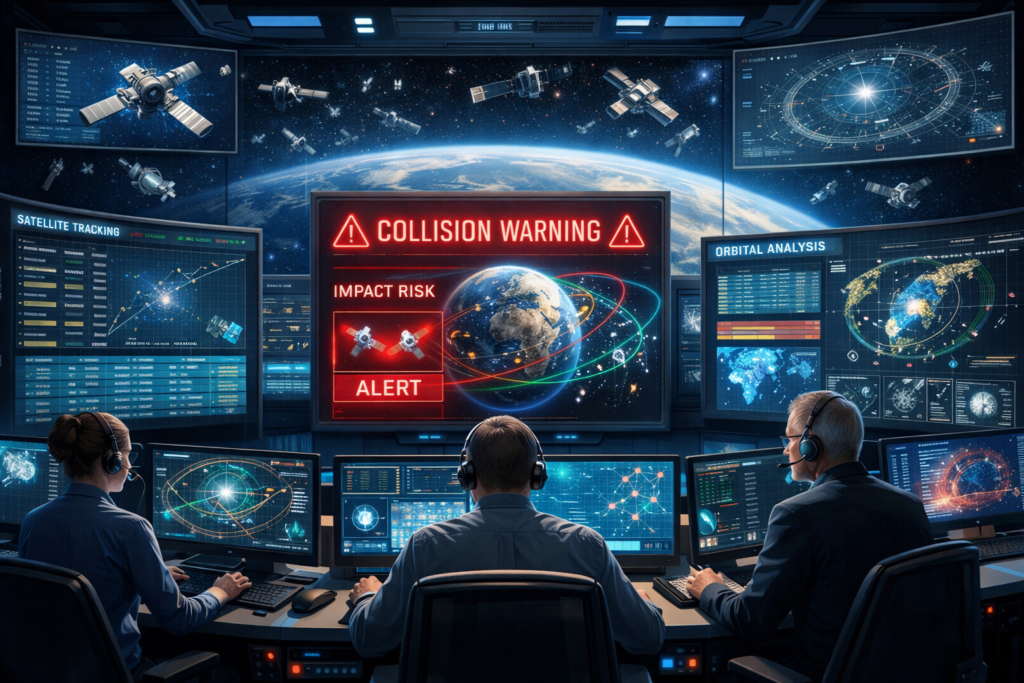
Space Traffic Management is the coordination, monitoring and control of objects in space to avoid collisions and to maintain safe operations. It resembles air traffic control but is much more complicated since there is no centralized control and space is dynamic.
Problems with the management of Space Traffic.
Along with the increased crowding in space, there are a number of challenges:
- Increasing number of satellites and debris
- Weak international laws and controls.
- Problems with following small objects.
- Possibility of collisions (Kessler Syndrome) chain-reaction.
- Absence of standardization in communications between operators.
Technology in STM.
High technologies are proving very critical towards addressing these challenges:
- Artificial intelligence-based real-time surveillance.
- Collision avoidance predictive analytics.
- Automated maneuver planning
- Overhead cameras to enhance visibility.
- Secure data sharing amongst the stakeholders using blockchain.
Important Innovations in the Future.
Self-driven Space Navigation.
Autonomous systems will be very important in future spacecrafts. These systems are capable of identifying possible threats and arrive at real-time decisions without the involvement of humans and minimizing the time of response and enhancing safety.
Space-Based Infrastructure
With the in-orbit refueling stations, repair centers, and docking facilities, the way spacecrafts work will change. Satellites can be serviced in space, rather than be sent back to Earth, increasing their lifetime and efficiency.
Sustainable Space Practices.
Orbital mobility is turning into a key focus of sustainability:
- Satellite design that has the capability of deorbiting.
- Active missions to reduce space debris.
- With environmentally-friendly propulsion systems.
- Encouraging global partnership to cleaner space.
- Introducing stringent disposal policies at end of life.
International Action and Policy Making.
International Collaboration
There is no owner of space and hence collaboration is necessary. Governments and organizations are collaborating in order to develop a set of norms and guidelines in space operation.
Regulatory Frameworks
There are efforts being made to develop international guidelines to launch satellites, orbital space and collision avoidance measures. Nonetheless, there is a problem of reaching an agreement because of conflicting interests.
role of the private companies.
The future is being shaped by the contributions of the space companies that are privately-owned. They are speeding up the creation of orbital mobility systems through their investments and innovations, and complicate space traffic management.
The Future of Orbital Mobility & STM
The future of space mobility will be more of a highly coordinated transportation system. Space will need smart infrastructure just as the cities need traffic systems to control movement. Key trends include:
- Whole satellite networks with complete independence.
- Live tracking systems around the world.
- Space highways and special orbital lanes.
- Decision-making with the incorporation of AI and machine learning.
- Increasing human activities in space.
With the development of technology, the distinction between science fiction and reality is getting blurred. Space traffic management and orbital mobility will be able to assist the satellites as well as facilitating space tourism, lunar expeditions and interplanetary travel.
H2: Frequently Asked Questions (FAQs).
1. In simple terms what is orbital mobility?
Orbital mobility refers to the capability of spacecraft and satellites to move and change their location in space effectively and safely.
2. Why is space traffic management important?
It eliminates collisions on space objects, secures valuable assets, and provides sustainability of space activities in the long term.
3. What is the greatest hazard of congested orbits?
The greatest threat is collisions, as it may generate debris and cause a chain reaction, increasing the risks in space operations.
4. What are some of the applications of AI in managing space traffic?
The AI assists in predicting collisions, optimizing routes, and autonomous decision-making of spacecraft.
5. Is it possible to overcrowd space and put it into use?
Yes, unless well controlled, there is a possibility that later on, some orbits would become useless due to excessive debris and congestion.