The internet is also taking a new dimension whereby control is slowly going away with the centralized corporations and it is taking a decentralized approach. The large tech firms have been digital gatekeepers over the years- determining the relationships between users, content sharing and making money. Web3 is disrupting this model by proposing protocols that are more focused on transparency, ownership and user empowerment.
How Dominance of Platforms Rises.
Centralization of Control
The Web2 world is characterized by the dominance of a few corporations in the digital world. These platforms control interaction with users, visibility of contents and monetization. They are convenient and scalable but at the same time, they put power in the hands of a few. This centralization usually results in biased algorithms, limited access and less freedom of the users and creators.
Ownership and privacy of data.
Data about users has turned into a valuable resource of the new digital economy. Nevertheless, the majority of users do not have any control over data collection and usage. Social media collects huge volumes of data, and such transparency is not always evident. This has brought up serious issues of privacy, misuse of data and absence of user consent and propelled the need to have a more decentralized one.
Monetization Barriers
Traditional mediums serve as a medium between producers and consumers. They charge fees, dictate the payment systems and may even demonetize or delete content. This makes them dependent, and lowers the earning potential of the creators, particularly the smaller ones who are attempting to expand in competitive situations.
What Do we mean by Protocols in Web3?
Decentralized Architecture
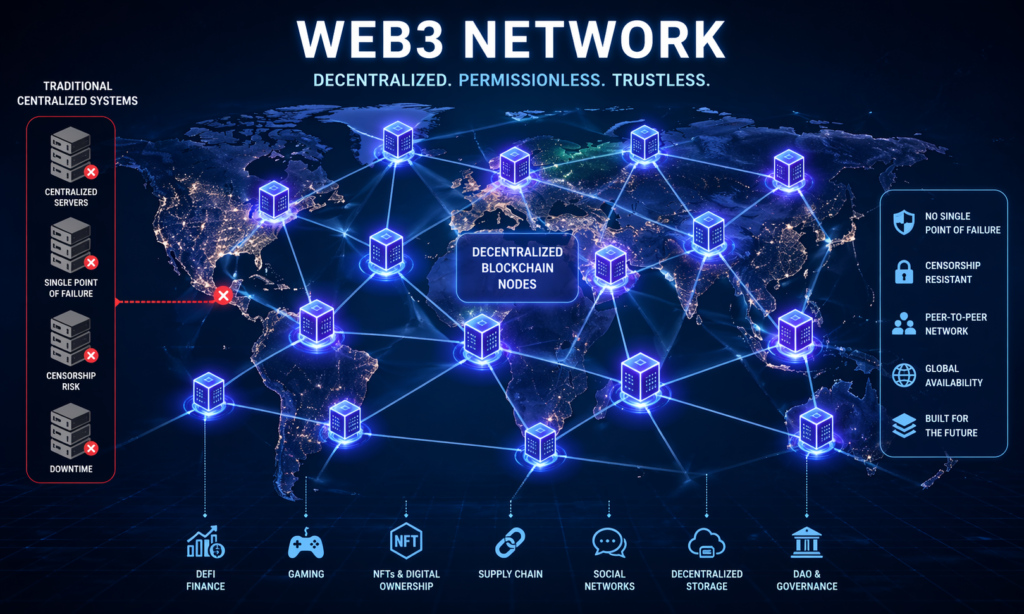
Web3 protocols are based on blockchain networks that are decentralized over multinodes. This will do away with the necessity of a central body and will make the system more robust and open. All the members of the network will help in the maintenance and verification of the system.
Artificial Intelligence and Bots.
Smart contracts are computer programs which are self-executable and are implemented over blockchain networks. They also play the role of automatically implementing rules and agreements without the need of intermediaries. This saves money, enhances productivity and creates confidence in the users.
Open System and Permissionless System.
Web3 protocols can be used by anybody who has access to the internet. No gatekeepers that are in charge of participation. This is an open-source that promotes creativity and enables developers to develop applications freely.
The major differences between Platforms and Protocols.
- Owning and controlling platforms are the property of the private company, and protocols are regulated by the communities and code.
- User data are stored in a central location on platforms and are sent out in networks via protocols.
- Platforms need to be permissioned and adhered to whereas protocols permit non-permissioned access.
- Platforms charge a considerable amount of revenue, whereas protocols allow direct peer-to-peer transactions.
- The platforms have a chance to censor or remove content whereas protocols are more resistant to censorship.
The power of the Web3 in the hands of users and creators.
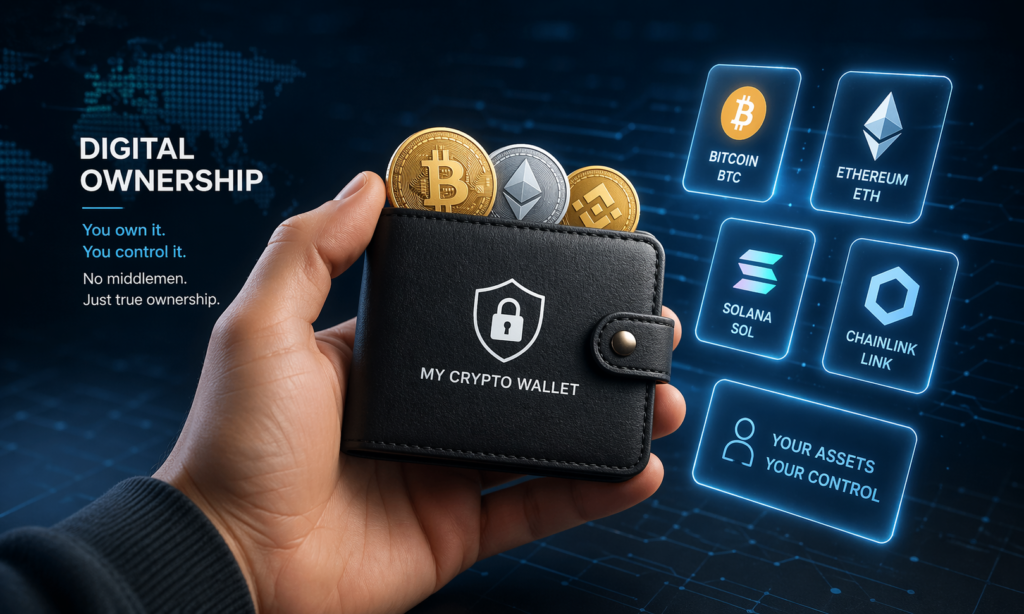
- Tokens and wallets enable users to have real ownership of digital assets.
- The creators can make money without depending on algorithms by the platform.
- Open systems are used to provide equitable revenue and rewards.
- Interoperability facilitates easy flow among applications.
As Platforms to Protocols: The Change.
Property and Value Sharing.
Web3 brings about a model whereby the users are not participants but stakeholders. Individuals may be co-owners of tokens or even contributors to networks, or they can enjoy the value they contribute to the network. This brings about a more balanced and inclusive digital economy.
Interoperability and Flexibility
Web3 protocols are built to collaborate as opposed to traditional platforms that are in silos. Users are able to transverse assets, identities and information across various applications without a hitch. The interdependent system encourages creation and the elimination of reliance on single platforms.
Less reliance on Intermediaries.
In most interactions using the digital medium, middlemen are not needed. Users can deal directly with each other whether it is a financial exchange, exchange of content or a form of governance. This saves on expenses and enhances productivity in the ecosystem.
Difficulties with Web3 Adoption.
Scalability and Performance
Numerous blockchain networks are still limited with regard to speed and transaction costs. Excessive prices and the lack of speed in processing may prevent the users and restrict the mass adoption.
Complexity and Usability
Web3 may not be easy to comprehend to the new user. The control of private keys, wallets, and decentralized applications is not that easy, and the learning curve may dishearten users at mainstream level.
Uncertainty of Regulations and Law.
Different governments and regulators are yet to adjust to the decentralized technologies. This uncertainty arises because of no clear regulations, as far as developers, investors, and users are concerned.
The Future of decentralizing Protocols.
Hybrid Digital Ecosystems
A combination of Web2 and Web3 models is likely to take place in the next couple of years. In order to remain competitive with the user-friendly interface, traditional platforms can consider adopting decentralized features.
Development of Community Governance.
Decentralized Autonomous Organization (DAOs) is an important aspect of Web3. The systems enable the communities to have a say in decisions, making the governance structure more democratic and transparent.
Redefining Internet Ownership
It is not a change of platforms to protocols alone that is a change in technology–it is a change in philosophy. It re-establishes ownership of the internet and distribution of value towards a more open and user-centric world of the internet.
Conclusion
The advent of protocols over platforms is a great evolution in the operation of the internet. Although the centralized systems have spurred growth and innovation over the years, it has also resulted in imbalances in the control, ownership and revenue allocation. Web3 is a promising alternative as it is decentralized, more transparent, and provides more power to users.
Despite the issues of scalability, usability and regulation, the wave of Web3 is only gaining momentum. With the maturity of the technology and its widespreads, the protocols can redefine the digital world- create a less dependent world on the gatekeepers and a more equal internet among all.
Questions and answers (Frequently asked questions, FAQS).
1. What is Web3?
The next-generation of the internet is referred to as Web3, which is based on blockchain technology and provides people with a greater degree of control over their data and online resources.
2. What are the significance of protocols in Web3?
The protocols substitute centralized control with transparent and automated systems that do not have any intermediaries.
3. What is the benefit to creators of Web3?
Producers are able to monetise directly on their fans without sharing their earnings with the sites and gain greater autonomy and revenues.
4. Is Web3 secure to the users?
Web3 is more secure as it is decentralized, though it is the responsibility of the user to take care of their private keys to evade risks.
5. Will Web3 be used to usurp conventional platforms entirely?
Web3 will probably co-exist with the more traditional platforms and slowly change the manner of construction and consumption of digital services.