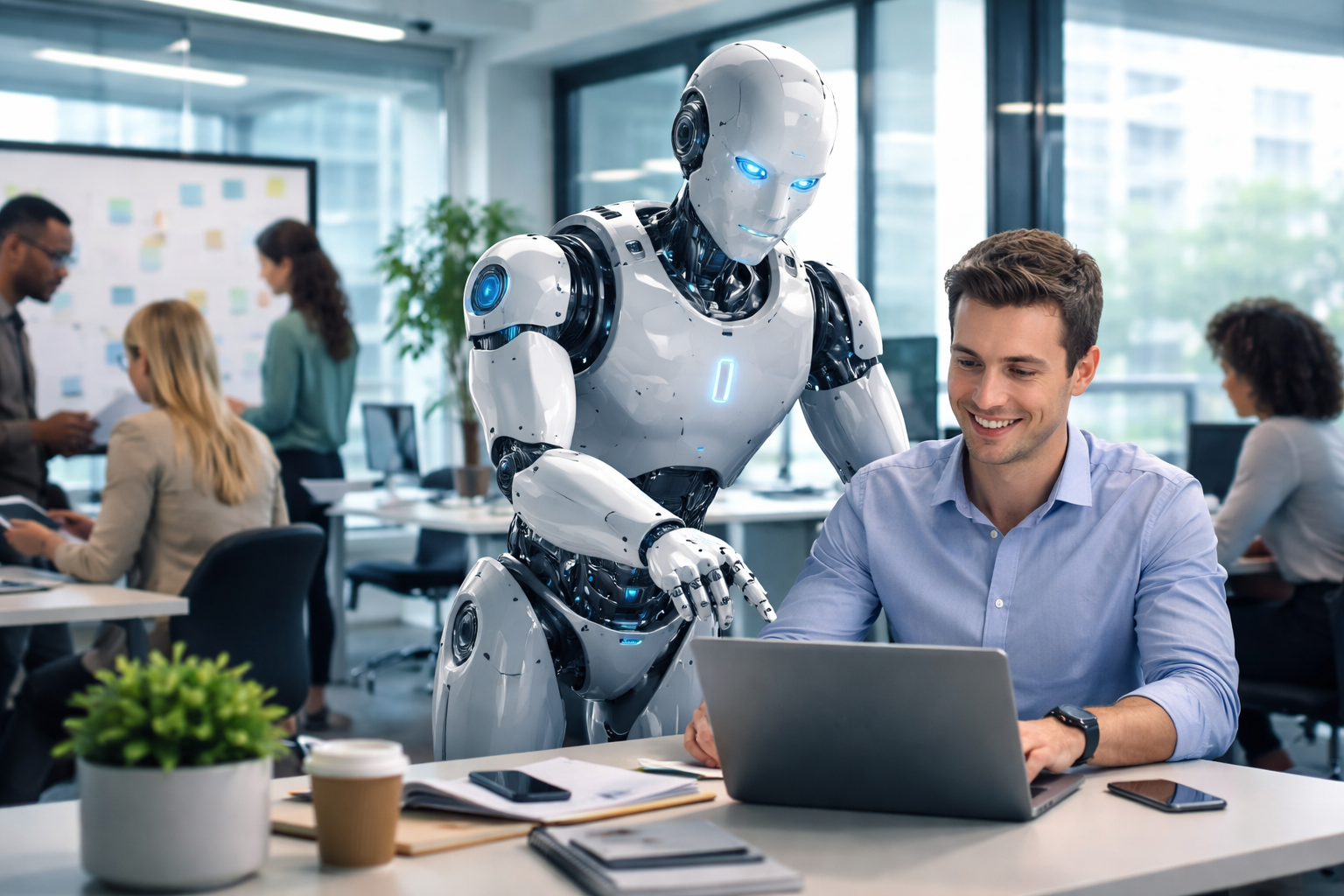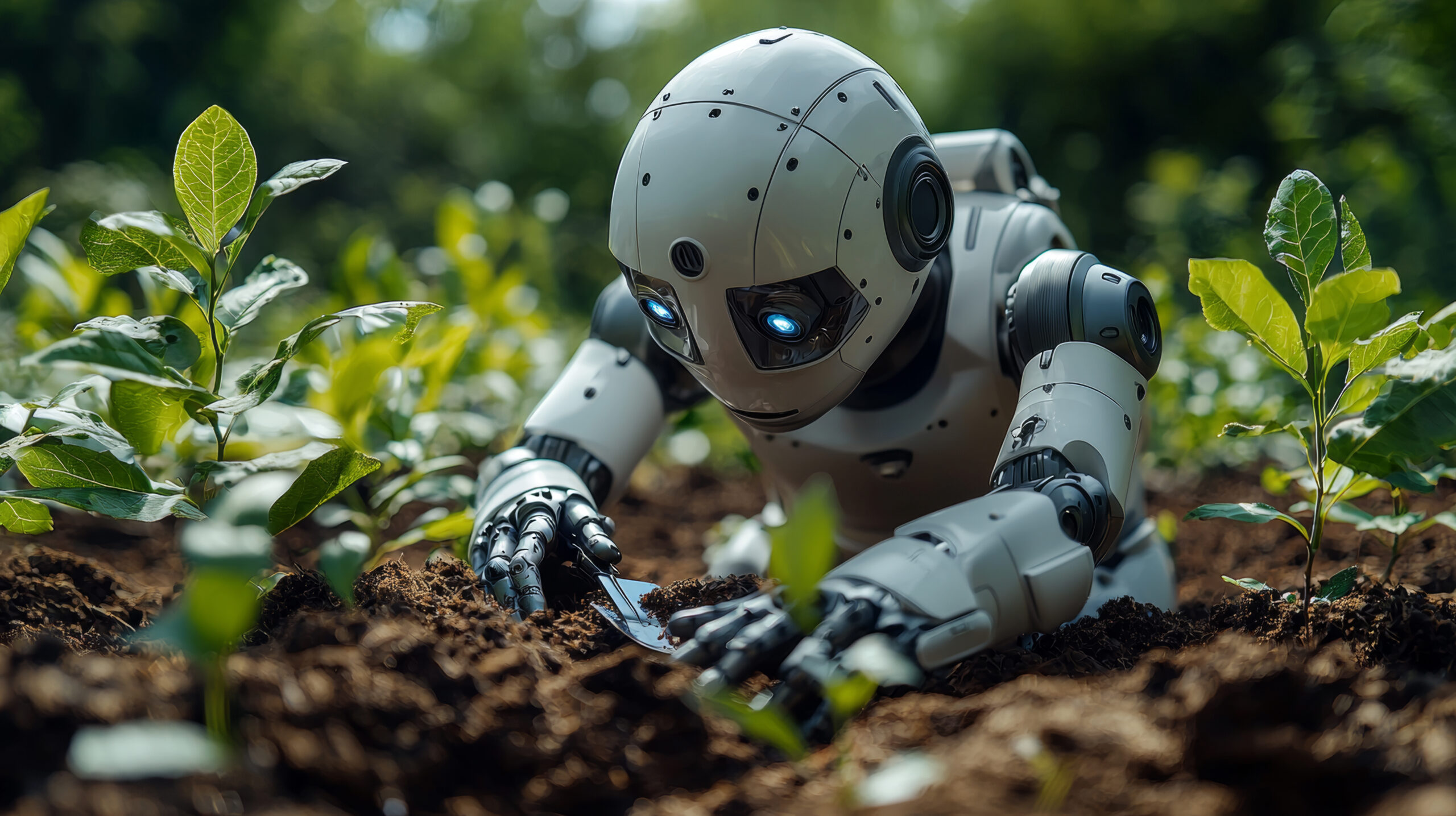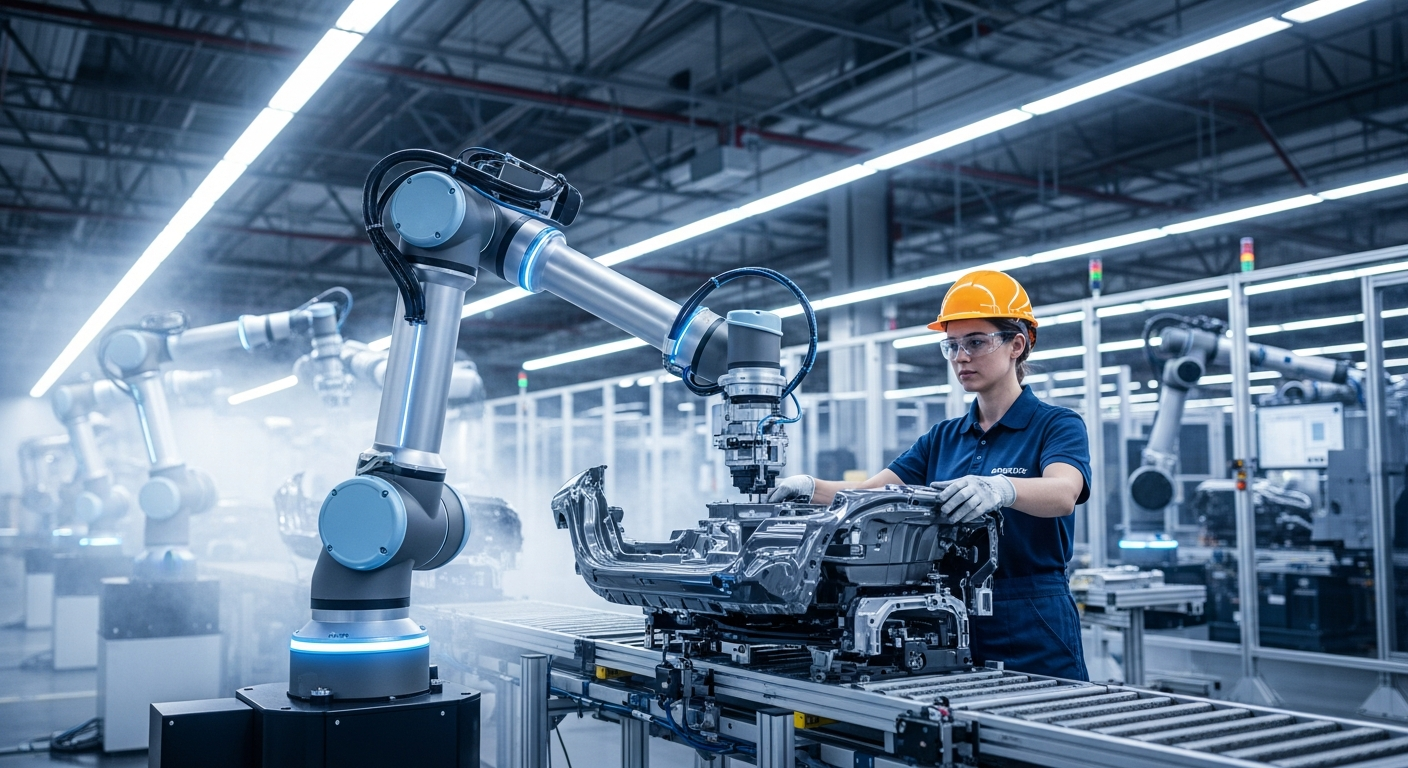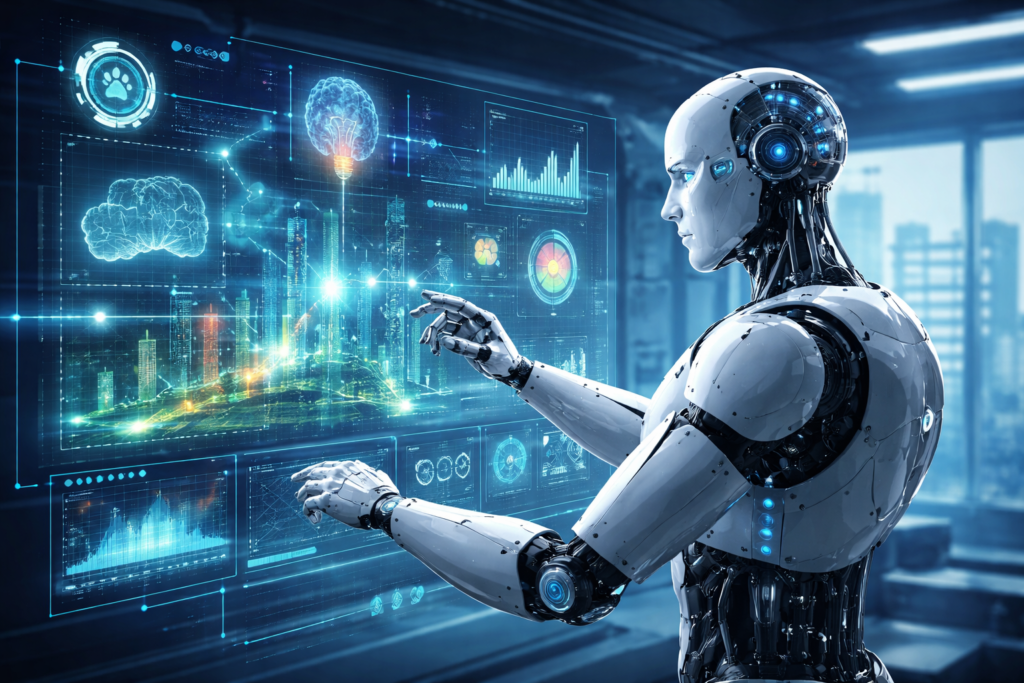
Self-evolving robots represent another new area in the field of robotics where the machines are not bound by pre-programmed instructions. Rather, they can learn on the job, cope with evolving conditions and even re-architect their own systems on the fly. Such development is facilitated by artificial intelligence development, which allows robots to work with a certain degree of independence, which used to be a science fiction notion.
The Central idea of Self-evolving Robotics.
Self-evolving robotics is concerned with the development of machines, which will continuously enhance themselves without human interventions. These robots process the information they receive in their surroundings, optimize their decision making and adjust their behavior and structure to attain improved results with time.
Understanding Autonomous Learning.
Independent learning enables robots to learn directly out of their surroundings without necessarily depending on fed information only. These systems detect patterns, optimize the responses and enhance efficiency through continual interaction. This adaptability of learning enables them to be very effective in complex and unpredictable situations.
Mechanisms of real-time adaptation.
One of the aspects of self-evolving systems is adaptation. Robots will react immediately by changing their behaviors based on sensor data and feedback loops. Be it rough terrain or delicate processes, real-time adaptation means that robots will be able to react properly to the new challenges regardless of the external control.
Redesigning and Optimization of Self.
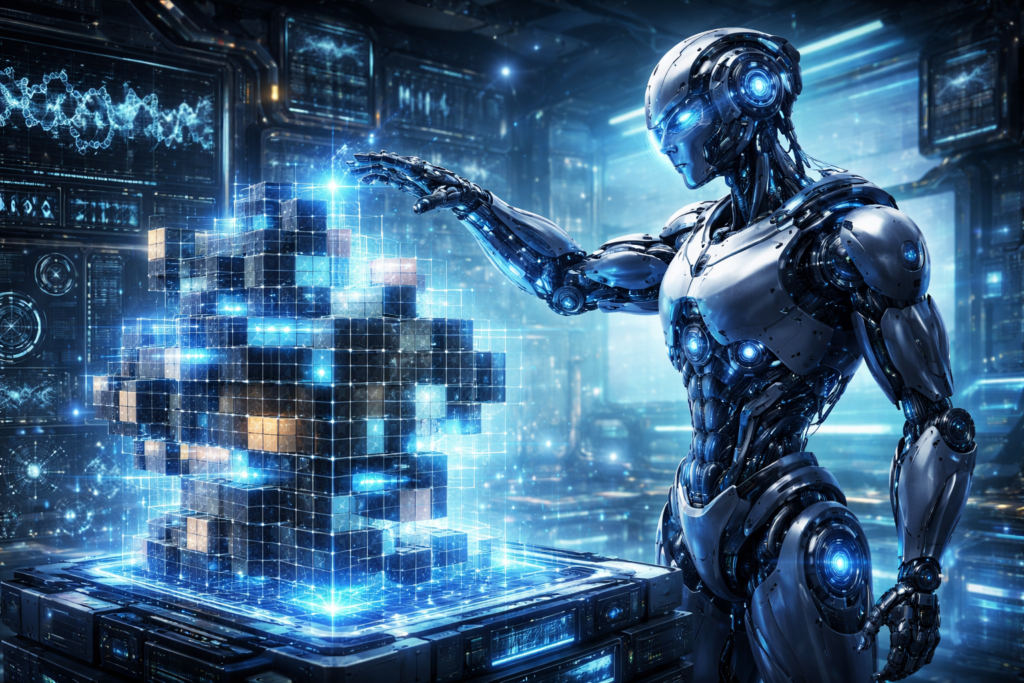
It is one of the most developed features to redesign internal algorithms or even the physical components. Robots based on AI-driven models have the capability to test a variety of configurations and choose the most efficient. This is parallel to natural evolution in biology as only the most efficient traits are left alive and enhanced with time.
Major Characteristics of Self-Evolving Robots.
- Life-long learning through interactions and feedback.
- Making decisions independently that are not under human supervision.
- Adaptation to changes in the environment and operations in real time.
- Optimization of algorithms and systems.
- Structural or hardware level reconfigurability.
Self-evolving systems power technologies.
The Self-evolving robots are based on a set of the latest technologies which collaborate to allow learning, adapting, and self-improvement. Such technologies are at the core of the contemporary autonomous systems and are actively developed.
Reinforcement Learning and Adaptive Intelligence.
Reinforcement learning allows robots to be reinforced by rewards and punishments. Trying out various actions, robots slowly learn the best ways to accomplish tasks. This method is particularly helpful in the sphere where set rules are inadequate, and systems can build their own effective and individual solutions.
Evolutionary Algorithms
The evolutionary algorithms resemble the process of natural selection, where several variations of solutions are generated and the most effective ones are selected. Robots evolve their behavior or design, becoming more efficient and flexible, over successive iterations. The technique is especially useful in tackling complicated optimization problems.
Neural Architecture Search (NAS).
Neural Architecture Search enables neural networks to be redesigned by robots. Systems do not have to use a fixed AI model but can also experiment to achieve learning speed and accuracy by using different architectures. This flexibility boosts their competence in managing various and changing tasks.
Fundamental Technologies In Evolution.
- Learning to optimize behavior by feedback.
- Iterative Design improvement Evolutionary computation.
- Neural architecture search for dynamic AI model enhancement
- State-of-the-art real-time environmental sensors.
- Robotics that are soft to allow physical adaptability and flexibility.
Practical uses of Self-evolving Robots.
The use of self-evolving robots has already been applied in a number of industries where flexibility and smartness are essential. Their learning capability and evolutionary nature make them very useful in areas that are either too complex or unpredictable by conventional machines.
Space Exploration
Robots have to work in unfamiliar and hostile environments in space missions. The self-evolving system has the ability to handle unforeseen setbacks, maximize the use of energy and enhance navigation techniques without human input and that is why they are the perfect solution to deep-space exploration.
Disaster Response
In case of natural catastrophes, the situation evolves quickly and unpredictably. The robots that are self-evolving are able to modify their movements, decision-making and tasks in real time which assist the rescue teams to locate the survivors and cope with the dangerous scenarios in a better way.
Healthcare and Surgery.
Adaptive robots play a role in healthcare and help the surgeons by analyzing patient data and prior operations. They become more accurate over time and minimize risks and lead to improved patient outcomes and more efficient medical practice.
Problems and Ethics.
Although self-evolving robots have a huge potential, they present serious issues that need to be resolved to make their use safe and responsible.
Control and Predictability.
With robots developing the capacity to develop without human intervention, it is increasingly difficult to control them. A key consideration by developers and regulators is whether a system will act in a certain way after a series of self-improvement.
Ethical Decision-Making
Autonomous systems can be subject to ethical dilemmas. Having robots decide according to human values is a critical issue; more so in sensitive areas such as healthcare and defense.
Security Risks
Cyberattacks can be targeted against self-modifying systems. When these robots are compromised, they may develop in a malicious manner and hence cybersecurity is the paramount consideration of designing them.
Conclusion
The future of robots lies in self-evolving robots which bring about systems that can learn, adapt and enhance themselves. Their applications in space exploration as well as healthcare are far reaching. Nevertheless, they have their benefits with control, ethical, and security issues. With the further evolution of technologies, the question of the balance between innovation and responsibility will be crucial to take full advantage of the opportunities offered by self-evolving robotic systems.
Frequently Asked Question (FAQs).
1. What are self-evolving robots?
Self-evolving robots are self-directed systems capable of learning, adapting and enhancing their actions or architecture without human assistance.
2. What is the way that these robots learn?
They learn through methods such as reinforcement learning, evolutionary algorithms, and optimization of neural networks to learn their environment.
3. Is it safe to have self-evolving robots?
On the one hand, they have numerous advantages; however, safety requires appropriate design, control, and regulatory systems that will guarantee controlled evolution.
4. In what applications are self-evolving robots today?
They are undergoing trials in the industry of space exploration, health, disaster management, and high-tech manufacturing.
5. What do you find to be the greatest difficulty in this area?
The biggest challenge is to make sure that systems evolve autonomously, are predictable and ethical in decision-making.